

ASEAN Nature-based Solutions (NbS) Study Reports
The EU (via TAF-GTEI) launches the NbS publication for ASEAN. This package provides analysis, assessments, and an NbS catalogue to help partners plan, scale, and finance resilient solutions.
Source: https://www.eeas.europa.eu/delegations/association-southeast-asian-nations-asean/technical-assistance-facility-green-team-europe-initiative-taf-gtei_en
Report 01 – Climate Risks and Hazard Analysis in ASEAN : Inventory of Nature-based Solutions (NbS) Experiences in ASEAN Member States, May 2025

The report presents a regional framework for scalable NbS, analysing biophysical conditions, land-use systems, and ecosystem-based approaches to address Southeast Asia’s diverse climate and environmental challenges. By identifying opportunities, barriers, and practical strategies for implementation, the study guides policymakers and practitioners in tailoring context-specific, inclusive, and resilient NbS across the region’s landscapes.
Report 02 – Nature-based Solution Characterisation & Typology Development for ASEAN Region, May 2025

The report establishes a regional framework for classifying and scaling up 70 NbS practices across Southeast Asia’s diverse landscapes, aligned with the IUCN’s seven societal challenges. By defining eight NbS typologies and nine key landscape categories, the report provides a practical roadmap to guide policymakers, planners, and communities in implementing context-specific, inclusive, and scalable NbS that strengthen climate resilience, biodiversity, and sustainable development across ASEAN.
Report 03 – Catalogue of Nature-based Solutions Practices in ASEAN Region, October 2025
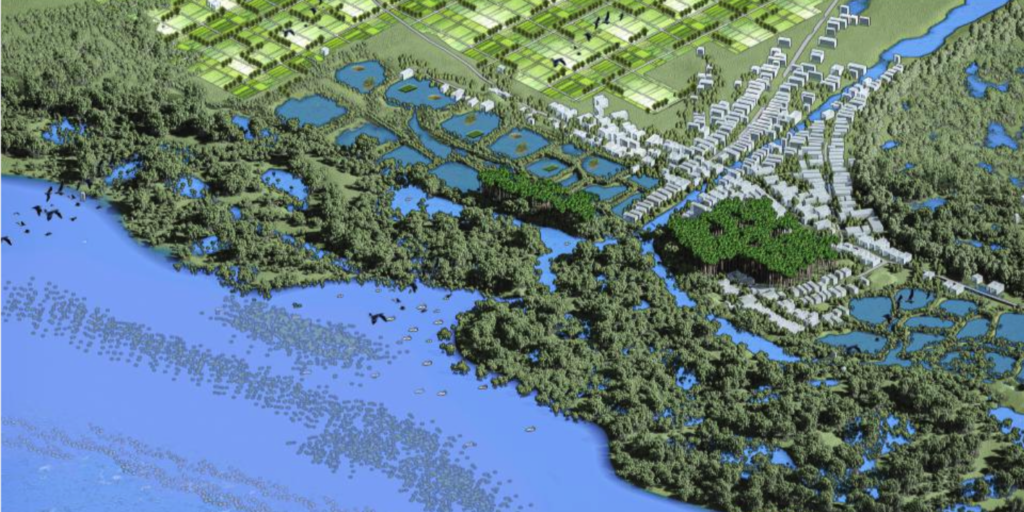
The ASEAN NbS Catalogue presents 70 proven NbS practices tailored to Southeast Asia’s diverse landscapes, offering a practical and scalable roadmap for governments, planners, and communities to address climate, environmental, and socio-economic challenges. Structured around nine key landscape categories, the catalogue links NbS implementation with ecosystem services, resilience planning, and sustainable land-use management. By aligning with the IUCN’s seven societal challenges, it demonstrates how nature-driven approaches can simultaneously strengthen climate resilience, enhance livelihoods, and foster sustainable development across the ASEAN region.
Report 04: Enhancing Climate and Disaster Resilience through Nature-based Solutions Across ASEAN and ASEAN Member States: Policy Barriers, Enablers and Opportunities, October 2025

ASEAN Member States (AMS) share comparable yet diverse biophysical, sectoral, and risk contexts, resulting in varied NbS needs across scales and sectors. A stocktake across six AMS shows that while NbS integration into policy and practice is complex, several common trends emerge. Robust policy frameworks, guidelines, and governance arrangements are critical for effective NbS implementation. Successful initiatives combine top-down leadership with inclusive, participatory governance, though challenges persist in scaling up NbS, ensuring long-term maintenance, and strengthening monitoring and evaluation systems.
Report 05: Enhancing Climate and Disaster Resilience through Nature-based Solutions Across ASEAN and ASEAN Member States: Financing Barriers, Enablers and Opportunities October, 2025

Supported by the EU’s Green Team Europe Initiative, the ASEAN Nature-based Solutions (NbS) Finance Roadmap guides ASEAN and its Member States in scaling up and mainstreaming NbS financing by 2030 and beyond. Covering six pilot AMS, it provides a high-level overview of the NbS financing landscape, identifies key barriers and opportunities, and sets out priority actions to harmonise NbS financing and align it with climate, disaster risk reduction, and biodiversity finance.
The roadmap finds that NbS financing in ASEAN is largely driven by public and international development finance, with limited private sector involvement. Climate adaptation offers the strongest pathway for scaling NbS, while disaster and biodiversity financing remain underutilised. Strengthening enabling environments, evidence, data platforms, and monitoring systems is essential to mobilise more diverse and resilient NbS financing across the region.